Tile Master® - Matching Game
- 3.6
- Rating
- 100.00M
- Installs
- Free
- Price

 Analysis by App-foxy
I first understood the appeal of Tile Master® after a few simple moves: collect three matching tiles, watch them clear, and immediately scan the board for the next safe combination. It is a familiar board-game idea presented as a quick mobile puzzle, but the tension comes from deciding which match to take now and which tile to leave available for later. That small decision is what turns an easy opening into a surprisingly careful endgame.
Developed by Higgs Studio, this free board game is aimed at a broad audience, with an Everyone content rating and support for devices running Android 6.0 or later. It has been available since February 22, 2020, and its current version is 2.8.8. The large audience is easy to understand: the rules are immediate, the controls are uncomplicated, and a round can fit into a short break without demanding a long tutorial.
How the matching loop feels from the first move to the reset
I find the first few moves welcoming, but the real test arrives when several tempting triples compete for the same limited space. This section looks at how the board’s changing options can turn a quick match into a decision about what to keep available, and why pausing before a tap is often more useful than moving quickly.
You May Also Like

 Blood Strike: 2.5 Anniversary
Blood Strike’s Loadouts Turn Every Drop Into a Tactical Gamble
A close look at Blood Strike’s custom loadouts: how fast access to signature weapons reshapes its battle royale rhythm, rewards preparation, and narrows the gap between fights.

 Pandora - Music & Podcasts
Pandora’s Music Is Easy to Start, but Harder to Recover
Pandora’s strength is its low-effort path from a seed to a station. Its weak spot is how much confidence it asks you to place in connection, setup, and quiet recovery.

 8 Ball Pool
 Is Built on Rivalries, Rematches, and Routine
A close look at the rivalries, rematches, shared routines, and unanswered safety questions that turn a quick pool match into a persistent mobile community.

 Samsung Music
’s Quiet Strength Is Playing What You Already Own
Its reach comes less from spectacle than from dependable access to a personal library. That simplicity is both the app’s strongest retention engine and its ceiling.

 AccuWeather: Weather Radar
AccuWeather Review: A Quick, Clear Forecast for Everyday Decisions
For everyday plans, the best forecast is the one you can understand quickly. AccuWeather makes rain timing, radar, and local conditions easy to act on, with a few trade-offs.

 Hill Climb Racing
Why Hill Climb Racing Still Turns Crashes Into One More Run
A tiny car, a bumpy hill and one more upgrade: Hill Climb Racing keeps resurfacing because its simple chaos makes every near-miss feel personal.
More From Our News Desk
View All News


The first action is simple, but the board asks a question
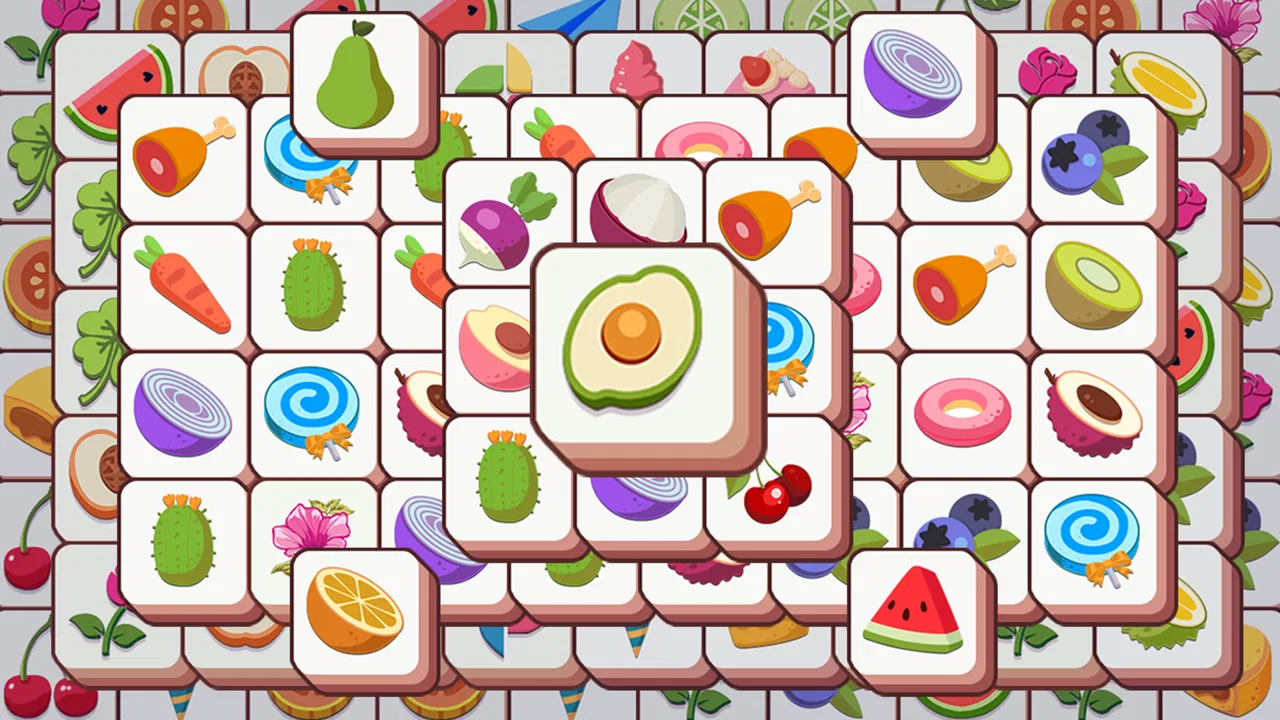
The basic action is selecting visible tiles and building groups of three identical designs. At the beginning of a round, this feels almost automatic. I can spot a trio, tap through it, and see the selected pieces move into the collection area before the match disappears. That instant response makes the game approachable even if I have only a minute to spare.
The important detail is that every tap also changes the space available for future decisions. A tile that looks harmless may be covering a useful match, while a different tile may be needed to complete a group later. I quickly stopped treating the board as a collection of isolated pictures and started reading it as a chain of dependencies. That is where the game becomes more than a visual matching exercise.
For a relaxed start, I look for an obvious triple and avoid filling the collection area with unrelated pieces. This is a practical habit rather than a complicated strategy: three matching tiles remove themselves, but several unmatched tiles can create a narrow path toward failure. The game rewards players who keep the next few moves in mind instead of tapping every attractive tile immediately.
The controls are well suited to touchscreens. A tap is enough to make a choice, so I do not have to manage dragging, timing windows, or a character at the same time. That makes the puzzle comfortable on a phone, particularly when I am playing one-handed while waiting for an appointment or taking a short break between tasks.
Feedback gives each move a clear rhythm
The feedback cycle is the strongest part of the experience. I tap a tile, it joins the temporary collection, and a completed trio produces a visible sense of progress. The board then changes, exposing new possibilities and creating a small invitation to continue. The response is quick enough that the game never feels disconnected from my actions.
That rhythm matters because the individual move is modest. There is no elaborate story scene or complex control system carrying the experience. Instead, the satisfaction comes from the sequence: identify, select, complete, clear, reassess. When a match opens several useful tiles, the board can feel generous. When it leaves awkward leftovers, I have to slow down and plan rather than rely on speed.
I also like that the game can shift mood without changing its basic rule. A cautious player can treat each board as a small logic problem, while a casual player can simply enjoy clearing obvious groups. The same interface supports both approaches, although the more demanding moments expose the limits of a purely relaxing interpretation.
One useful way to play is to pause after every completed trio and inspect what has become available. It is tempting to continue tapping because the board has just rewarded you, but that moment is often when the next mistake begins. The cleared space may reveal a better sequence, and taking a few seconds to compare options is usually more valuable than acting on the first visible match.
Why the reward works, and where it can feel thin
The reward is not based on a complicated progression system that I need to study before enjoying the game. The immediate payoff is the board becoming cleaner and the next move becoming possible. That makes the game easy to return to, especially when I want a small accomplishment rather than a long competitive session.
There is also a useful mental reward in rescuing a crowded board. A round that looks nearly blocked can sometimes be recovered by finding the correct order of matches. The pleasure comes from recognizing that the problem was not impossible; I had simply been looking at the wrong group first. This gives the matching loop more staying power than random tapping would provide.
Still, players who need deep strategic variety may eventually find the core action repetitive. The central task remains collecting triples, so the experience depends heavily on enjoying observation, ordering, and gradual clearing. Someone looking for the broader systems of a traditional strategy board game, a competitive match-three title, or a story-driven puzzle adventure may prefer a different category altogether.
The free entry point makes trying it straightforward, but optional purchases range from $0.99 to $99.99 per item. I would approach those purchases carefully. The game is easiest to appreciate when the satisfaction comes from solving the board itself, not from feeling pushed to spend in order to preserve momentum. If you are reviewing the purchase screen with a child, the Everyone rating should not be mistaken for a guarantee that every spending decision will be understood without supervision.
The reward is strongest when I treat space as a resource
My most useful adjustment was to think of the holding area as limited breathing room rather than a simple waiting place. Every unmatched tile occupies attention and reduces flexibility. I therefore try to complete an available trio before collecting a pair that has no immediate third member, unless that pair is clearly part of a larger sequence.
A second helpful habit is to prioritize tiles that unlock several others. The most attractive match is not always the one with the prettiest or most visible symbols. Sometimes the better choice is the trio that removes a blockage and exposes multiple new tiles. This creates a trade-off between immediate clearing and future access, and it is the point where the game rewards deliberate play.
I also recommend scanning the whole board before making the first tap. The opening arrangement often suggests a route, but that route can be ruined if I commit to a convenient pair too early. A quick visual inventory helps me notice whether a tile is part of a nearly complete trio, whether two matching pieces are separated by covered tiles, and whether a tempting move will leave too many unrelated pieces behind.
These are small techniques, but they change the feel of a round. Instead of asking only, “What can I match?” I ask, “What will this match make possible?” That question gives the game a more thoughtful character and reduces the frustration of losing because I acted quickly without checking the consequences.
Why another session begins after the board clears
The reset is a major part of the appeal. Once a board is finished, the mental pressure disappears, and the next round offers a clean start without requiring me to remember a complicated build, inventory, or narrative objective. I can close the game after one successful attempt or continue because the next board feels like a fresh puzzle rather than a repeated chore.
This reset also makes the game suitable for irregular play. I do not need to reserve a long block of time or reach a checkpoint before stopping. A short session can still feel complete because the action has a clear beginning, middle, and end: inspect the layout, manage the collection, clear the groups, and start over when ready.
That convenience has a downside. If you prefer games with a strong sense of long-term development, the clean reset may feel like a lack of purpose. The satisfaction is local to each board, not necessarily tied to a rich character journey or a persistent strategic campaign. I see it as a deliberate trade-off: less commitment and less complexity in exchange for immediate accessibility.
In an everyday situation, I might open it while waiting for a coffee, play through the first few decisions, and stop when the order is ready. If I have more time later, I can return without needing to reconstruct where I was. That makes it more practical than a game whose enjoyment depends on uninterrupted concentration, although a difficult board can still make “just one round” last longer than expected.
How it compares with other board and matching games
Compared with a physical tile game, this version removes setup, cleanup, and the need for another person. I can begin instantly, and the touchscreen handles the movement and removal of pieces. The trade-off is that the tactile pleasure of real tiles and the social element of sitting across from someone are missing.
Compared with match-three games, the focus is different. Traditional match-three play often emphasizes swapping pieces inside a fixed grid, while this game asks me to select matching tiles and manage the order in which they enter the collection. That makes planning the holding space more important than creating a chain through adjacent swaps. If you enjoy thinking several moves ahead, this distinction may appeal to you; if you prefer explosive cascades and constant board movement, the slower selection-based loop may feel restrained.
Compared with classic digital board games, it is more immediately understandable but less socially rich. There is no need to learn a large rule set before starting, yet there is also less variety than in a game built around different pieces, opponents, or tactical phases. I would choose this one for solo decompression, not for replacing a shared family board-game night.
The game’s rating of 3.7 from around 142 thousand ratings suggests a mixed but substantial response rather than universal agreement. Its reach is considerable, with over 100 million installs, but popularity does not remove the central question: do you enjoy careful triple matching enough for repeated rounds? In my experience, the answer depends less on the number of available boards and more on whether the core decision-making remains satisfying after the novelty fades.
Who will enjoy it, and who should skip it
I would recommend it to players who want a low-barrier puzzle that can be played in short bursts. It suits people who like sorting, visual recognition, and the satisfaction of turning a crowded layout into an empty one. It is also a reasonable choice for families looking for an accessible game with an Everyone age rating, provided adults handle purchase decisions thoughtfully.
It is less suitable for anyone who dislikes repetition or becomes irritated by a board that punishes impulsive taps. The game asks for patience more than reflexes, and its simple rule does not transform into a broad collection of unrelated modes. Players who want direct competition, a narrative campaign, or a deep strategic economy should look toward alternatives designed around those goals.
I would also skip it if my main reason for playing is social interaction. This is fundamentally a solo puzzle activity. It can occupy a shared moment if people take turns discussing moves, but its design does not replace a multiplayer board game where every player has an active role.
My verdict on the complete action-feedback-reset loop
Tile Master® works because its loop is easy to enter and surprisingly easy to overthink. I choose a tile, receive immediate visual confirmation, complete a trio, enjoy the cleared space, and then face a new arrangement that makes another round tempting. The best moments come from turning a risky-looking board into a controlled sequence through careful ordering.
The limitations are equally clear. The underlying activity remains narrow, optional purchases require awareness, and the reset-based structure will not satisfy people seeking a persistent adventure or competitive depth. Its value comes from focus, not breadth.
For me, that is enough to make it a worthwhile free download when I want a quiet mobile puzzle. I would begin with the expectation of short, self-contained sessions, keep an eye on how many unmatched tiles I collect, and resist tapping merely because a match is visible. If that style of thinking sounds enjoyable, this board game offers a clean and accessible way to fill spare minutes. If you need richer progression or more variety, its simplicity will probably become the reason you move on.
Higgs Studio has built a game that understands the appeal of one more attempt: the last board ends, the pressure resets, and a new layout presents a fresh problem without demanding a fresh lesson. That balance of instant access and modest planning is its clearest strength, and it is the reason I would recommend trying it before deciding whether the repeated matching loop has enough depth for your habits.
FAQs for Tile Master® - Matching Game
01What is Tile Master® - Matching Game about?
Tile Master® - Matching Game is a casual puzzle game where players match tiles with various images to clear the board. It offers engaging gameplay with increasing difficulty levels, making it both challenging and entertaining. The game is designed to test your memory, concentration, and strategic thinking.
02Is Tile Master® free to play?
Yes, Tile Master® is free to download and play on both Android and iOS devices. However, like many free-to-play games, it includes in-app purchases. These purchases can help enhance the gaming experience by providing additional features or removing ads, but they are entirely optional.
03Does Tile Master® require an internet connection?
Tile Master® can be played offline, which makes it an excellent choice for users who want to enjoy the game without an internet connection. However, some features, like in-app purchases and updates, may require an internet connection to function properly.
04What age group is Tile Master® suitable for?
Tile Master® is suitable for players of all ages who enjoy puzzle games. Its simple mechanics make it accessible for younger players, while the increasing difficulty can challenge older players. The game is family-friendly, with no inappropriate content, making it a great option for children and adults alike.
05Are there any ads in Tile Master®?
Yes, Tile Master® includes ads, as it is a free-to-play game. These ads can appear between levels or as optional videos that offer rewards. Players who prefer an ad-free experience can purchase the ad removal option through in-app purchases, allowing uninterrupted gameplay.
Pros
- Engaging and addictive gameplay.
- Simple controls
- easy to learn.
- Smooth graphics and animations.
- Regular updates with new levels.
- Suitable for all ages.
Cons
- Contains ads that can be intrusive.
- In-app purchases can be pricey.
- Limited offline functionality.
- Repetitive levels can be tedious.
- Requires frequent internet access.

Tile Master® - Matching Game
Gallery